Best Solar Company in Orange County: How to Choose in 2026
March 18, 2026
|
Choosing a solar company in Orange County isn't just about getting the lowest price — it's about finding a team that will be on your roof, in your attic, and connected to your home's electrical system. The stakes are high, and the wrong choice can mean shoddy work, voided warranties, or years of frustration.
With hundreds of solar installers operating across OC, how do you separate the professionals from the fly-by-night operations? This guide breaks down exactly what to look for — and what to avoid — when choosing the best solar company in Orange County in 2026.
The California solar industry has gone through major changes in the past few years. NEM 3.0 reshaped how solar savings work. Several large national installers have scaled back or left the market entirely. And with the current economic climate, some companies are cutting corners to stay profitable.
For Orange County homeowners, this means the gap between a great installer and a mediocre one has never been wider. A well-designed system with quality equipment and proper installation will save you thousands more over its lifetime than a cheap system that underperforms or needs repairs.
This is non-negotiable. In California, solar panel installation requires a C-10 Electrical Contractor license issued by the Contractors State License Board (CSLB). Some companies operate under a C-46 (Solar Contractor) license, which is also valid but less common.

Always verify a company's license on the CSLB website. Check that it's active, properly bonded, and has no disciplinary actions. A licensed contractor means the work meets California's strict electrical and building codes — and gives you legal recourse if something goes wrong.
Orange County has its own permitting requirements, utility territories, HOA rules, and roof types. A company that's installed hundreds of systems across cities like Anaheim, Santa Ana, Irvine, Huntington Beach, Fullerton, and Newport Beach will navigate these local nuances far more efficiently than an out-of-state company sending subcontractors.
Ask how many installations they've completed in your specific city. Local installers know which AHJ (Authority Having Jurisdiction) offices are backed up, which require special documentation, and how to avoid permitting delays.
The best solar companies give you a clear, itemized proposal that shows:
Be wary of companies that only quote a monthly payment without showing you the total system cost. Some use dealer fees — markups added to loan amounts that inflate your total cost by 20–30%. Always ask: "What is the cash price, and what is the total financed cost?"
Not all solar panels are created equal. The difference between a budget panel and a premium panel shows up in three areas:
Ask your installer which panel brands they use, where they're manufactured, and what the warranty covers. US-made panels with 25-year manufacturer warranties are the gold standard.
A reputable solar company stands behind its work with comprehensive warranties:
The installation warranty is especially important. If a panel fails, the manufacturer covers replacement — but who reinstalls it? A strong workmanship warranty from your installer means they'll handle labor and service calls for years to come.
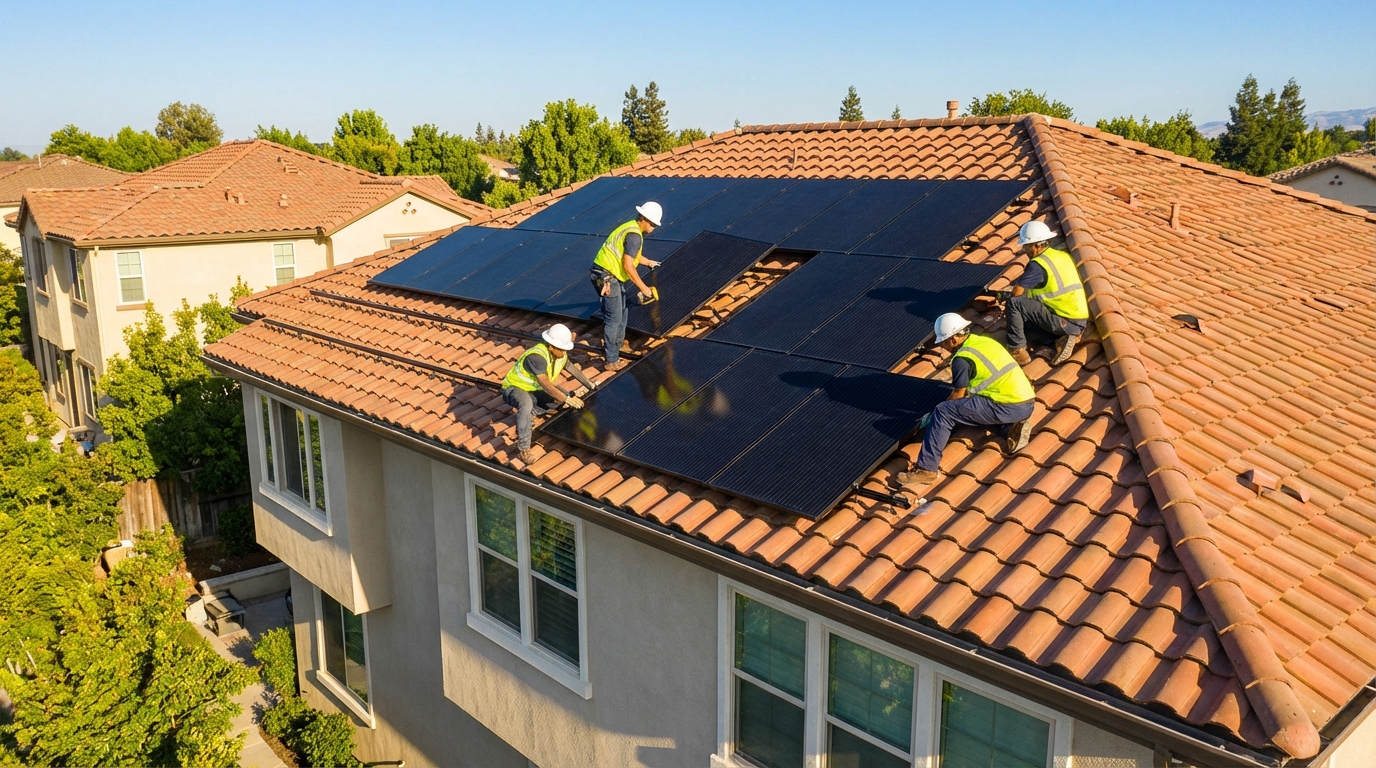
Some solar companies act purely as sales organizations, outsourcing every installation to subcontractors. This creates accountability gaps — if something goes wrong, the sales company points to the installer, and the installer points to the sales company.
The best Orange County solar companies use in-house crews or closely managed installation teams. Ask: "Will your own crew be on my roof, or do you subcontract?"
Under California's NEM 3.0 policy, pairing solar with battery storage is essential to maximize savings. Export credits for excess solar sent to the grid dropped by roughly 75% compared to the old NEM 2.0 program.
Your solar company should be able to:
If a company is still designing systems as if NEM 2.0 exists — maximizing panel count without considering batteries — they're behind the curve.
The solar industry, unfortunately, has its share of bad actors. Watch out for these warning signs:
Here's what Orange County homeowners can expect to pay for residential solar in 2026:
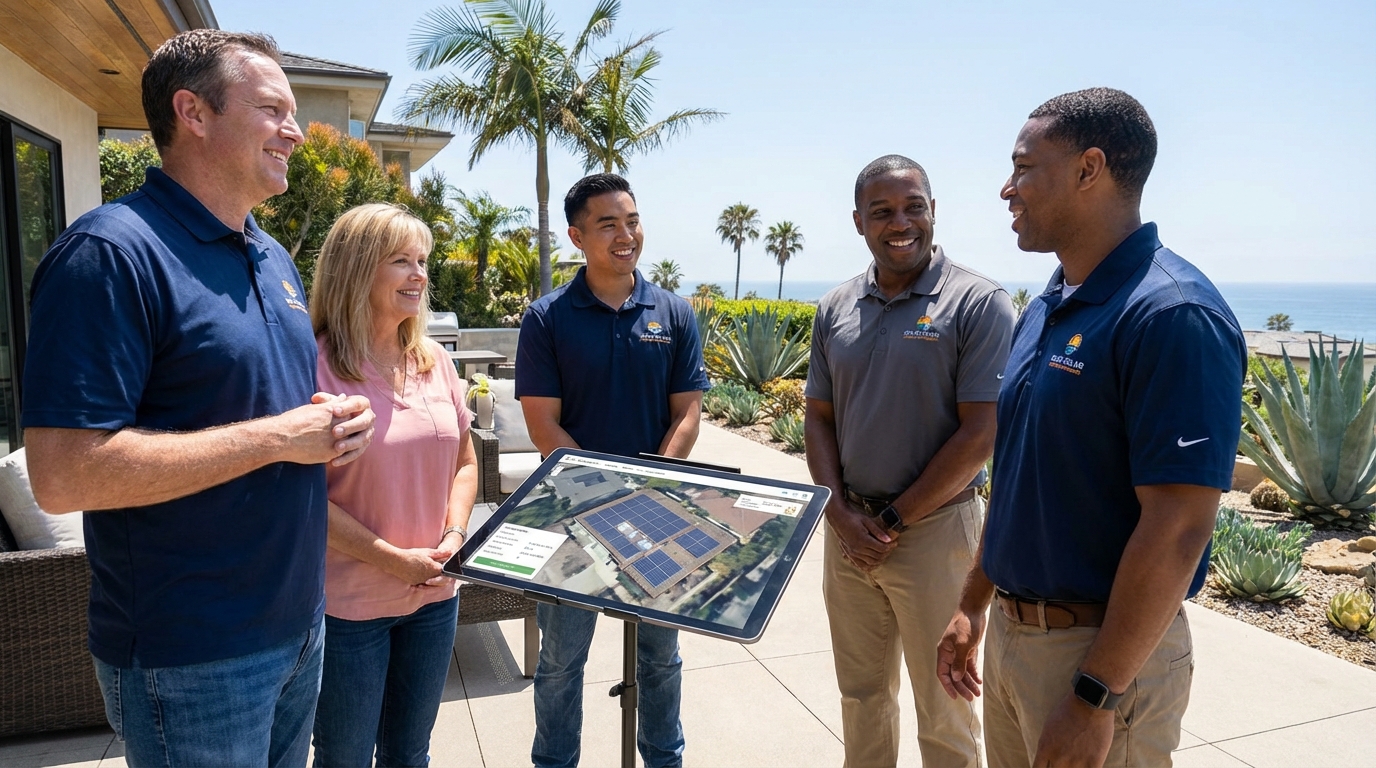
Financing options are available through multiple providers, including cash purchase, solar loans, and lease/PPA arrangements. The right option depends on your financial situation — a good installer will walk you through all options without pushing you toward the one that earns them the highest commission.
For a detailed breakdown, see our guide on how much solar panels cost in California in 2026.
Orange County is one of the best places in America for solar energy:
Everysun checks every box on this list — and then some:
Get a free consultation from Everysun — we'll design a system specific to your Orange County home, show you transparent pricing, and explain exactly how much you'll save.
Visit the California Contractors State License Board (CSLB) website at cslb.ca.gov and search by company name or license number. Look for an active C-10 (Electrical) or C-46 (Solar) license with no disciplinary actions and current bonding.
With a solar loan, you own the system and receive all the financial benefits. With a solar lease or PPA, a third party owns the system on your roof, and you pay them for the electricity it produces — typically at a lower rate than the utility. Ownership through a loan generally provides better long-term savings.
Under NEM 3.0, yes — a battery is strongly recommended. Without a battery, excess solar energy is exported to the grid at very low credit rates ($0.05–$0.08/kWh). With a battery, you store that energy and use it during peak hours when rates are $0.40–$0.60/kWh, dramatically increasing your savings.
The actual installation typically takes 1–3 days. However, the full process — from signing a contract to having your system turned on — usually takes 6–10 weeks, depending on permitting timelines, equipment availability, and utility interconnection.
Not when installed correctly. Professional installers use engineered mounting systems with flashed roof penetrations that are waterproofed and warrantied. A reputable company includes a roof penetration warranty with every installation. In fact, panels can actually protect the portion of roof they cover from UV degradation and weather.
If you own your solar system (purchased outright or through a loan), it transfers with the home and increases its value. Studies show homes with owned solar sell for 4.1% more on average. If you lease, the lease may need to be transferred to the buyer, which can complicate the sale.
© 2025 Everysun Inc. All Rights Reserved.


Get Your Free Solar Quote
Request your free quote and see how solar can work for your home and budget