Solar Panel Installation in Los Angeles: Complete 2026 Guide
March 18, 2026
|
Los Angeles is one of the best cities in the world for rooftop solar. With over 290 days of sunshine per year, some of the highest electricity rates in the country, and strong state policies supporting clean energy, LA homeowners are in a prime position to cut their energy costs dramatically.
But going solar in Los Angeles in 2026 looks different than it did a few years ago. NEM 3.0 changed the economics, battery storage became essential, and the market has shifted. This comprehensive guide covers everything LA homeowners need to know — from costs and savings to permits, timelines, and how to find the right installer.
Let's start with the fundamentals. LA's solar potential is among the highest in the nation:
A typical 8 kW solar system in Los Angeles produces approximately 12,000–14,000 kWh per year — enough to offset most or all of a typical household's electricity consumption.
Here's what LA homeowners can expect to pay in 2026:
These prices include panels, inverters, mounting hardware, labor, permitting, and interconnection. The wide range reflects differences in equipment quality, roof complexity, system size, and whether battery storage is included.
For a more detailed cost breakdown, see our guide: How Much Do Solar Panels Cost in California in 2026?
California's NEM 3.0 (Net Billing Tariff), effective since April 2023, fundamentally changed how solar savings work. Understanding this is critical for any LA homeowner considering solar.
Under the old NEM 2.0, excess solar energy you sent to the grid earned near-retail credit ($0.25–$0.50/kWh). Under NEM 3.0, export credits dropped to approximately $0.04–$0.08/kWh — a reduction of 75% or more.
With such low export values, the strategy has shifted from "generate as much as possible and export the rest" to "use as much of your own solar as possible." This is where battery storage becomes essential:
With a properly sized battery, most LA homeowners achieve 80–90% self-consumption rates, making NEM 3.0's impact on export credits largely irrelevant.
Read our full explainer: NEM 3.0 Explained for California Homeowners
Los Angeles is served by two different utilities, and your utility affects your solar economics significantly:
Your installer should know exactly which utility serves your address and design your system accordingly. The optimal panel-to-battery ratio differs between LADWP and SCE customers.
Here's what to expect from start to finish when going solar in LA:
A reputable installer starts with a thorough assessment of your home:
This results in a custom system design and transparent proposal showing system size, equipment, costs, and projected savings.
Once you sign the contract, the engineering team creates detailed plans:
These plans must meet California's Title 24 energy code and local building requirements.
Every solar installation in LA requires building and electrical permits. The timeline depends on which jurisdiction handles your permits:
An experienced local installer handles all permitting paperwork on your behalf — you shouldn't have to visit any government office.
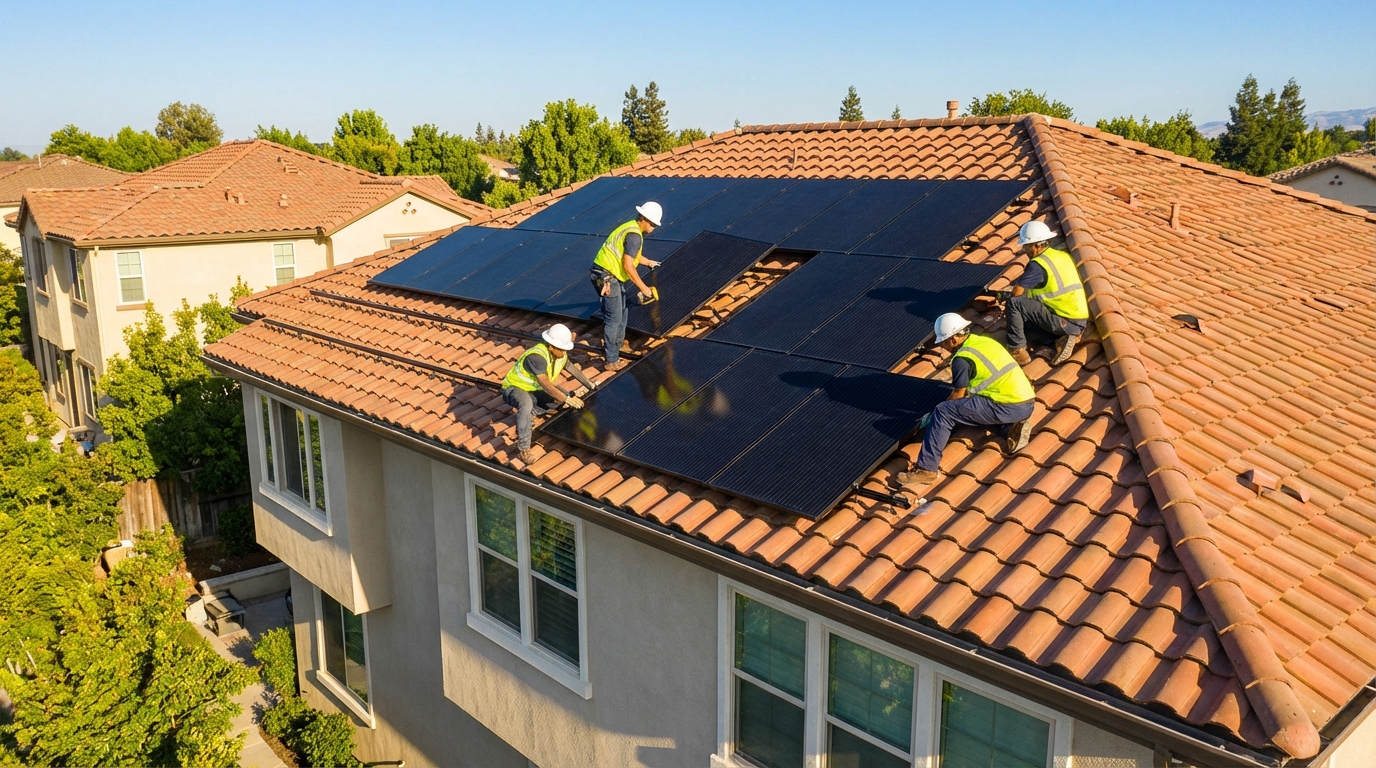
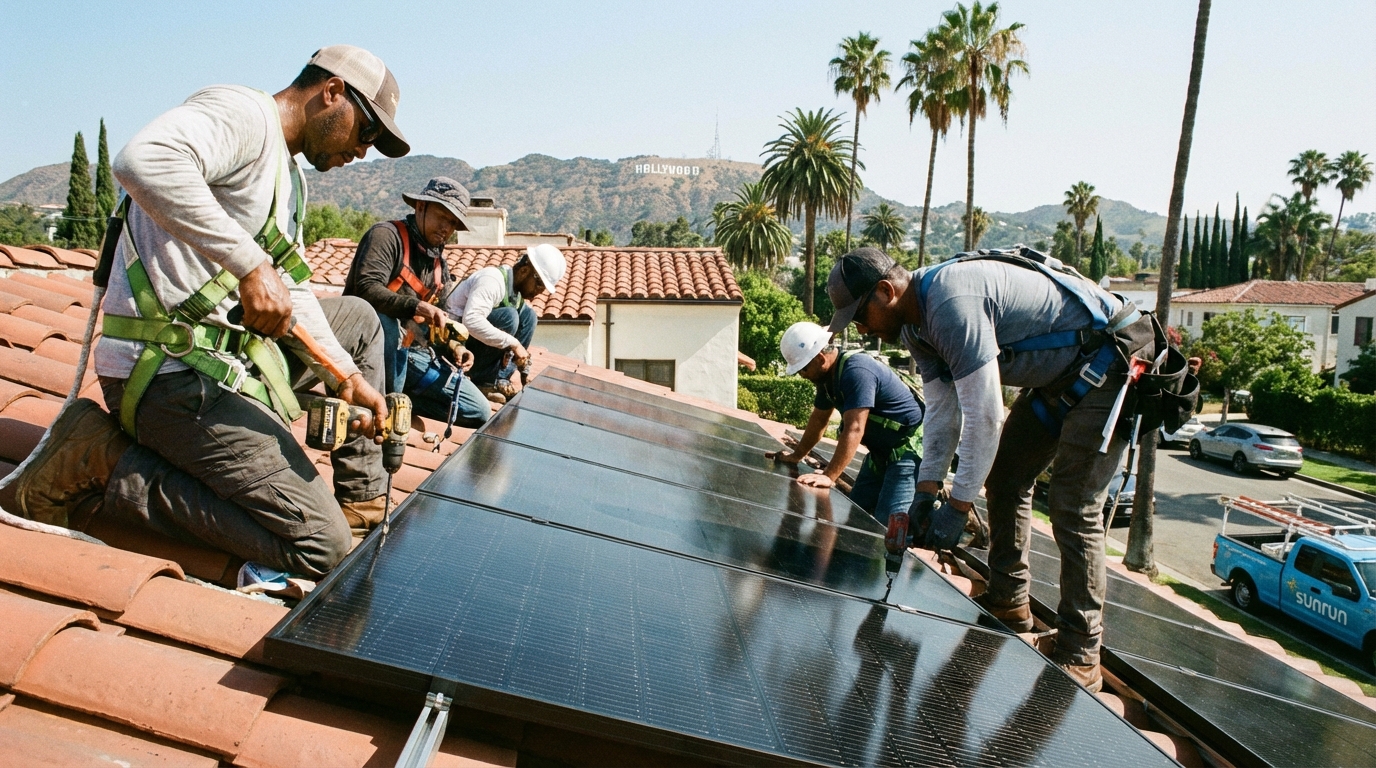
The physical installation is the fastest part of the process:
A professional crew arrives on time, protects your landscaping, and leaves your property clean when they're done.
After installation, your system needs two approvals before it's fully active:
Once you receive PTO, your system is officially active and you start earning credits for any solar energy produced.
California's Solar Rights Act (Civil Code 714) prevents HOAs from prohibiting solar installations. However, HOAs can impose reasonable restrictions on placement — as long as those restrictions don't increase costs by more than $1,000 or reduce system output by more than 10%. Your installer can help navigate HOA approval processes.
If your home is in a designated historic district (common in areas like Highland Park, Angelino Heights, or West Adams), you may need additional approvals. Panels typically need to be placed out of view from the street — a skilled installer can design a system that complies while still maximizing production.
Many LA homes — especially mid-century and modern architectures — have flat or low-slope roofs. These require tilt-mounted racking systems to angle panels toward the sun. While this adds modest cost, flat roofs often provide more usable space and easier installation access.
Parts of LA County fall within Very High Fire Hazard Severity Zones (VHFHSZ). Solar installations in these areas may require additional fire safety setbacks (keeping panels away from roof edges and ridges) and rapid shutdown capabilities — both of which modern systems already include.
The LA solar market is crowded, which means homeowners have plenty of options — but also plenty of risk. Here's what to prioritize:
Everysun serves the greater Los Angeles area with local expertise, premium US-made panels (up to 22.5% efficiency), a 20-year installation warranty, and systems designed specifically for NEM 3.0 optimization. Schedule a free consultation to get a transparent, no-pressure proposal for your LA home.
Here's what typical savings look like for a Los Angeles homeowner in 2026:
SCE customers generally see faster payback and higher lifetime savings due to higher base electricity rates.
Yes. Despite changes from NEM 3.0, solar with battery storage remains one of the best investments for LA homeowners. With electricity rates rising 5–8% per year and systems lasting 25+ years, most homeowners see payback in 6–10 years and save $55,000–$120,000 over the system's lifetime.
A solar-only system (7–9 kW) costs $18,500–$24,000. Solar with battery storage runs $29,000–$40,000. Costs vary based on system size, equipment quality, roof type, and whether electrical upgrades are needed.
Yes. All solar installations in Los Angeles require building and electrical permits. Your installer should handle all permitting paperwork as part of their service. The City of LA processes permits through LADBS, while surrounding cities may use SolarAPP+ or their own departments.
The typical timeline from contract signing to system activation is 6–10 weeks. The physical installation takes 1–3 days, but permitting, engineering, and utility interconnection make up the bulk of the timeline.
No. California's Solar Rights Act (Civil Code 714) prohibits HOAs from banning solar installations. They can impose limited restrictions on placement, but those restrictions cannot increase system cost by more than $1,000 or reduce output by more than 10%.
Yes. Homes with owned solar systems sell for approximately 4.1% more on average, according to Zillow research. On a $900,000 LA home, that's a premium of about $37,000. Additionally, California law exempts solar systems from property tax reassessment.
Both are excellent for solar. SCE customers typically see higher savings because their base rates are higher ($0.36–$0.52/kWh vs. LADWP's $0.22–$0.30/kWh). However, LADWP has its own net metering program that can be more favorable for exports. Your installer should optimize your system based on your specific utility.
© 2025 Everysun Inc. All Rights Reserved.


Get Your Free Solar Quote
Request your free quote and see how solar can work for your home and budget